Take 5 with ‘Rudy’s Belly of Bees’ Author Shannon Schaefer

Shannon Schaefer Rudy's Belly of Bees Interview

Shy, quiet, timid, reserved—these are just a few of the labels children may be given growing up. For Shannon Schaefer, these labels masked what was really the beginning of her journey living with anxiety. Now fresh out of university, the Guelph-based writer has turned her lived experiences into an educational resource with the release of the illustrated children’s book ‘Rudy’s Belly of Bees,’ which is already helping kids, parents, and teachers around the world. 

Following its November release, Schaefer’s book has been picked up by the likes of Google and Apple Books, Indigo, Walmart, and Amazon, landed on multiple bestsellers lists, and, thanks to its earlier-than-anticipated release, become a welcome Christmas gift for many kids experiencing their own “belly of bees.”

As she continues to reflect on a whirlwind year, I connected with Shannon to get the backstory on her quick transition from journalism graduate to published author and the milestones that have mattered most.

Rudy's Belly of Bees Cover
Cover art for ‘Rudy’s Belly of Bees’ by Shannon Schaefer. “Rudy is me in a lot of ways, but she’s also a lot of other kids. For the actual illustration, my illustrator Becca Marshall got a bunch of baby photos from me and based it off that, except with way curlier hair!” Schaefer shares. (Photo courtesy of Shannon Schaefer)

Tell us about ‘Rudy’s Belly of Bees’ and what inspired you to write it.

We meet the main character, Rudy, on the day of the school relay race, which should be a really fun day, but instead of feeling excited she’s feeling what we call a “belly of bees,” or anxiety. We get to follow Rudy throughout the day as she navigates the new emotions and what they make her act like and feel like, and then also as she starts navigating coping strategies. She’s not overcoming those emotions as if they’re gone forever but learning how to live with them because with anxiety, that is what life can be like. Rudy speaks to and was written from a place of my own experience but also something that I think is so relatable to so many kids.

Referring to anxiety as having a “belly of bees” is a very fitting analogy. Can you share more about how that description came to you?

The way I’ve always explained my anxiety is that I feel like I’m buzzing. Sometimes that’s in ways that make me feel anxious and jittery, but sometimes it’s very internal and my stomach actually feels like it’s rattling. When I thought about that noise and feeling, I started to think about beehives, especially when the queen is in it and they kind of shake. That beehive is exactly what I feel my stomach would look like sometimes. Everyone knows what a bee is, we know the sounds that they make, we know what they do in the hives, so it’s easy to kind of visualize that for children.

What role do you hope ‘Rudy’s Belly of Bees’ plays in the broader conversation about youth mental health?

I feel like we’re getting a lot better, but I think this is a situation where the more people we have presenting different ways of explaining that feeling of a “belly of bees” and different coping strategies, the better. I just definitely wish that something like this was around when I was younger so that there was a character that I could have had to be like, I am like Rudy and I can see how Rudy gets through this and I can mimic that. I am 100 percent a book person and I think we can all find so much safety and so much of ourselves in books sometimes, so I hope for children they can also do that with my book.

We met in journalism school. Did you find that degree helped you with writing and publishing the book, and if so how?

In journalism you have to be very succinct and get your message across quickly and with kids, even though you can elaborate a bit, you actually don’t get that many words either. Most children’s books are originally 700 to 900 words, which when you’re trying to do a full plot, especially describing emotions and introducing coping, it’s not that much to work with! So, I think journalism helped with figuring out, for example, on the first page, what do I need readers to know to understand the rest? I would also say there are similarities in the sources and accountability aspect because I have a minor in psychology, but when my book was getting edited I had a children’s psychologist read it. I thought that, like a journalist, I wouldn’t just go into a community acting like I know everything and start writing about it.

https://www.instagram.com/p/CW_Rgo9pnSy/

This is just the beginning for you and ‘Rudy’s Belly of Bees.’ Is there one milestone in particular that you’re especially proud of ending the year?

I think the best milestones are when I’m able to distribute this resource that I am hoping is exactly what some kids are going to need. I had an individual comment on my Instagram that they read it to their class of 30 kids, and that is beyond how many books you sell or lists that you make. The fact that I can maybe help one or two kids avoid some of the things I didn’t get to avoid is very exciting. I hope for any kid they can better understand the classmate next to them or their friend and be able to say, “Hey, I know about this one technique. Do you want to try this mindful breathing exercise?” The stronger your support system, and the more resources within your support system, the better chances you’re going to have success yourself.

Continue Reading

Take 5 with Eco Explorer Mario Rigby

Mario Rigby Interview

Toronto-based eco explorer Mario Rigby spent the first week of May, National Physical Fitness and Sports Month, redefining what it means to seek adventure during his latest physical mission. The Caicos Challenge, a five-day human-powered expedition, took him back home to Turks and Caicos to fulfill his dream of crossing the islands, from one end to the other, by land and water — doing nothing more than running, cycling, kayaking, paddle boarding and swimming

By completing the mission, Mario has become the first known person to make such a crossing from Salt Cay to West Caicos — a 250-kilometre spanning feat. And this isn’t his first time making headlines: His original “claim to fame” came in 2018 following his Crossing Africa expedition, a two-year, 12,000-kilometre voyage from Cape Town to Cairo.

As he catches his breath from the Caicos Challenge, I had a chance to Take 5 with Mario and chat about being a “son of the soil,” staying focused, and always persevering.

Your remarkable adventures have taken you all over the map and you show no signs of stopping. What got you into this way of seeing the world?

I am an eco explorer and I focus on expeditions that are in line with covering social and environmental injustices, but at the same time they have to be really adventurous. A tourist goes to places with expectations; you’re going there to view the culture in a way that you would view a painting. A traveller is someone that goes with the flow, sees things for what they are and experiences the culture they’re around. The explorer is the one who unearths new experiences that no one else has seen before and kind of paves a way for humanity to follow, much like other great explorers in the past. Us explorers have an impact and a responsibility.

What I try to do is impact the places I’m at and the social causes I try to raise awareness for, and hopefully that inspires people. I also raise money for charitable organizations that are linked to whatever expedition I’m on. During the Turks and Caicos expedition, I was raising funds for the Turks and Caicos Reef Fund to help underprivileged youth learn how to swim and learn about marine life.

Thinking back to reaching the finish line of the Caicos Challenge, what did it mean to you to finally cross off your goal of completing an expedition where you grew up? 

Ever since I was born, Turks and Caicos has been like my playground. One of my dreams was always to traverse the length of the entire islands. I think the combination of showing that there was an adventurous side to the place, raising money and awareness for marine life conservation and educating the youth, encouraging people to be responsible when they visit and understand the ecosystem of the islands, and at the same time making it fun really underlines the principles that I follow for all my expeditions.

Travelling through Turks and Caicos this way must have been an entirely new experience. What was one of the most breathtaking moments or views during the challenge?

The first one that comes to mind was when I kayaked from Salt Cay to Grand Turk, which no one has ever done before. I had met Chev (Dixon, a professional sea kayaker) — a young kid from New York, also born in the Carribean — on Instagram and asked him to come join me for the crossing. As we were kayaking, there were dozens of dolphins breaching beside us, which was a beautiful sight. But I think the most special thing that I witnessed during the expedition was the community aspect of it; really getting to see people come together and support the expedition, but also being very proud to see that their own people are doing this. They call me the “son of the soil,” so every day where I landed there was fanfare and people with flags and it was incredibly special. 

Given that May is National Physical Fitness and Sports Month, can you share how you prioritize physical and mental wellbeing during your expeditions?

What I do is really focus on the day-to-day aspects. You have to be wholly focused on what you’re doing, because as soon as you’re distracted it stops you from being able to push to your ultimate limit. I definitely pushed to my ultimate limit on this excursion traversing to East Caicos for 13 hours across sharp rocks over the sea. If you make one tiny mistake, that could be the end of your life right there, or you could be stuck there for a day. With all of these expeditions, I know mental clarity is the most important aspect of these huge, physical challenges. Once you have the mental fortitude to be consistent and to hone in, for everything else on the outside, let that distraction go and focus on the moment. I focus on every step, every breath, every heartbeat.

What message do you hope your challenges send to people who are following along from home or hoping to follow in your footsteps?

Perseverance is so important. Say you have a dream; many people give up before they even start and say, you know what, it’s just a dream, it’s just not realistic. If you dreamt it, it can be realistic just due to the fact that you fathomed the idea. The easiest part is to come up with the idea, but the second part is you have to do the work. Most people are afraid that with the investment they’re putting in, it might not pan out. Well, that’s the risk you have to take. At least half the expeditions I’ve planned didn’t even make it into fruition because it was just too difficult or the technology didn’t exist yet. You just have to do the work to eventually get there, and keep doing the work until it happens. Your doubts are distractions.

Continue Reading

Take 5 with Social Media Star Jessii Vee

Jessii Vee Interview

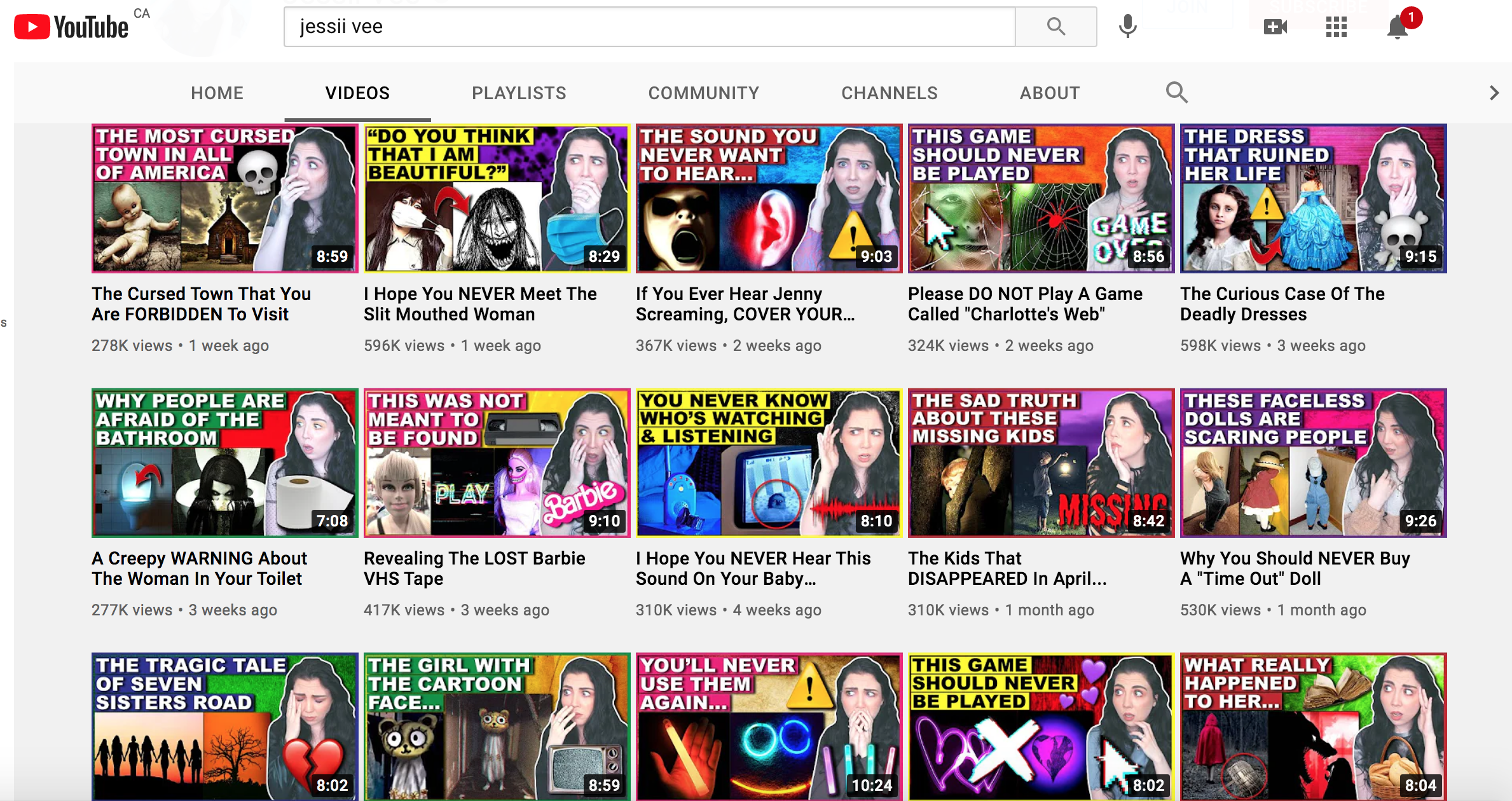
Canadian YouTuber and TikToker Jessii Vee always offers up one key piece of advice to anyone who asks how to get started in the industry: “There are millions of people in this world, so being unique and staying true to who you are will make your channel and videos stand out.”

This advice is something Jessii has stuck to since day one. In 2014, she started blogging and posting authentic and relatable YouTube videos about her life, including the ups-and-downs of dating and creepy neighbours. As her channel took off, it grew with her, evolving into a hub for videos about all things strange and unusual — a theme inspired by the dark and mysterious worlds displayed in pop culture and created by her favourite director Tim Burton. With content that’s equal parts entertaining and educational, Jessii’s audience (2.6 million subscribers on YouTube and 3.7 million on TikTok!) can learn about topics like cursed towns, lost TV shows and, most recently, why everything they know about mermaids is wrong.

Screenshot of YouTuber Jessii Vee's latest video uploads

As passionate as she is about her subject material, Jessii is also someone who cares deeply about others, and she lets her young viewers know they’re not alone if they’re struggling with anxiety or bullying like she did growing up. In this Take 5 interview, hear from Jessii how she’s prioritizing making the internet a safer space, raising awareness about Lyme disease, and being inspired by her viewers.

At the heart of your brand is your desire to create safe spaces for youth to engage with your content and each other. Why is this important to you?

When I was growing up, anxiety and mental health weren’t spoken about enough. This was one of the reasons why I decided to start posting personal stories on my YouTube channel. I wanted kids to be able to relate to my experiences so they would feel less alone. It has made me so happy to see comments from kids telling me how relieved they feel knowing someone else is going through the same thing as them. It’s so important to know that millions of people are suffering from loneliness, anxiety, depression or being bullied.

Just before the pandemic began, you had started a platform called You Are Not Alone (YANA) and grown it to 50+ schools and counting. What was its mission, and how do you continue to keep the message alive virtually?

YANA’s mission is to be a group in schools where people come together as a community and reach out to others that are feeling isolated or being bullied. It’s meant to be a safe, non-judgmental place where students can be supported and make friends. I was passionate to start this movement because I really struggled in school growing up. I had terrible anxiety and I was very shy. Because of this, I was a target for bullying and I found myself spending my lunch breaks alone in the library. On really bad days, I would have my lunch in the bathroom stall. If I had a group like YANA at my school back then, things would have been so much easier for me.

Unfortunately when the pandemic hit, it became difficult to continue these YANA groups in person, so we moved them online. I created an Instagram page called @yana_group where I posted weekly inspirational quotes to add positivity to people’s timelines. I also do monthly live streams called “Jess Checking In” where I discuss different important topics like bullying, mental health, chronic illness and isolation.

In addition to this being Mental Health Awareness Month, it’s also Lyme Disease Awareness Month — something you’ve publicly struggled with since 2017. How are you using your platform to draw awareness to Lyme disease?

My subscribers have been along the journey with me since day one. I wanted to be completely transparent because I was surprised to find out that not many people know what Lyme disease is. It’s incredibly hard to get treatment in Canada, so I’m hopeful that spreading awareness will change the way Lyme disease is diagnosed and treated in my country and around the world. I’m also donating a dollar from each order placed on my merch website towards The G. Magnotta Foundation’s research. They are aiming to improve a person’s ability to enter a clinic and get a test that will accurately report infection status after having been bitten by a tick. 

How have you stayed inspired during the pandemic?

Taking some mental health days has been super beneficial for me. I also love to draw and paint. Letting myself sit down and be creative for a few hours really helps with my video inspiration. But I actually mainly look to my subscribers to stay inspired. I get so many amazing comments and DMs on my social media each day from people telling me how much my videos have helped them during the pandemic, which motivates me to keep going. They also send me some really cool video topics and ideas!

Do you have a message you want to share with your dedicated Vee Team?

A message that I always stand by and love to tell my subscribers is to embrace your weird side because normal is boring and people will love you for who you really are!

Continue Reading

Take 5 with Madison MacGregor

Madison MacGregor Interview - Angela McLean

New year, new priorities. If taking care of your mental health is at the top of your to-do list in 2021, you need to meet (and follow) activist Madison MacGregor.

At the age of 21, the Toronto-based multi-hyphenate has already worked with Emmy Award winning dance choreographers, starred in two Family Channel shows (Backstage and The Next Step), published a novel with her sisters through a fully-funded Kickstarter campaign, and built an online community of more than 25,000 Instagram followers. Madison has since turned her attention to a cause close to her heart and launched Mind Time with Madison, an insightful new podcast with non-profit organization Teaching Everyone About Mental Health. TEAM. serves as a pocket guide for the support networks of those struggling with mental illness and aims to inspire people of any age, but especially youth, to pursue their passions without fear of stigma or judgement. 

Madison is living proof that your struggles can be turned into your superpower. For my first Take 5 of 2021, see what Madison had to say about her mental health journey, prioritizing self care (something we all can and should do!), and her favourite accounts to follow on Instagram.

How did you first connect with TEAM. and come up with the idea for Mind Time with Madison?

I discovered the founder, Mackenzie Drazan, on my Instagram explore page and messaged her as she was a trained professional for mental health. At the time I was struggling with depression, an eating disorder and anxiety, and both of us were bullied growing up and wanted to do what we could to help other people. She brought me on and has been a great mentor to my sisters and I. Through the podcast, which is one of the facets of the Instagram page, we normalize talking about mental health, especially for young people.

What empowered you to feel comfortable talking openly about your mental health journey?

I had struggled for the first couple of years when I was going through depression and I didn’t even know then that I was going through it, so I actually had a whole learning curve myself of figuring out what was happening to me. My family helped give me perspective on exactly what we’re doing at TEAM. the power of talking to people and just simply communicating what I was going through. They were able to assure me, You’re not crazy. There’s something deeper going on. 

I also watched a lot of people and professors online talking about depression or anxiety. Hearing their experiences helped me put words to my own experiences, and by sharing my journey I hope I can do the same thing for other people.

On Mind Time with Madison, you’ve spoken with experts in the health space, as well as philanthropic celebrities like actress Lexi Underwood. What was one of the biggest takeaways from your chat with Lexi?

A lot of what Lexi has experienced with mental health has been due to the racial injustice in the United States and how traumatizing it’s been to see people who look like her being killed. It makes her feel like her life doesn’t matter — and so she shared a lot about that, and about therapy. Having a therapist who was a Black woman helped her because they could understand and talk about microaggressions and other lived experiences.

I love what Lexi is doing with We the Voices of Gen Z, which is something she created with her production company, and how that’s a space to help open up discussions, support activists, get more representation in Hollywood, and raise awareness around mental health. She has so much wisdom that I just remember being blown away by her level of maturity at such a young age. 

Do you have a favourite mood boosting activity you turn to when you’re having a bad mental health day? 

I do as much as I can to get out in nature — and for the people who are reading who don’t have access to nature, movements like getting up and walking, taking a shower, washing your face, and simple things that connect you to the elements are really helpful. For me, walking outside feels like meditation and that definitely helps ground me and helps with whatever symptoms I may be experiencing. My goals this year are going on a walk and journaling every day.

Take 5 profiles inspiring and influential people we should all be following. Who are some of your favourite people to follow?

I like TEAM. (@myteam.social) of course and think they are a great resource. I would also recommend Jay Shetty (@jayshetty) — he’s incredible. There’s also The Holistic Psychologist (Dr. Nicole LePara, @the.holistic.psychologist) who talks a lot about trauma and articulates it very well. She does this thing where she gets your number and every day she’ll text you a quote or piece of advice, which has been really helpful.

As far as books go, I interviewed Dr. Alex Korb on Mind Time with Madison and his book The Upward Spiral is a game changer for people who are struggling with depression. It’s an Amazon Best Seller — and for good reason. I’ve recommended it to so many of my friends and I think especially now, it’s extremely valuable to have really great, actionable steps backed by neuroscience to help you cope. 

Continue Reading

#BellLetsTalk in 2018

This post was originally written as a Facebook status. I believe the message is important to share here on my blog as well.

It’s 2018. It’s almost the end of January, but in case you haven’t heard it yet happy new year. Now, don’t let this be the year you don’t take the opportunity(ies) to educate yourself…to be compassionate…to hear…to LISTEN…to be a support…to ask for support, if needed…to be human.

It’s 2018. More important to this very moment, today’s #BellLetsTalk day. You don’t need a corporation to tell you to look out and be there for your fellow people, and yourself. Just do it – today and every day. Everyone needs a saviour sometimes; life ain’t always easy. But it’s worth it. You’re worth it. Don’t let your demons define you. Don’t give them that power.

Finding it too hard to resist them today? That’s OK. You’re OK and you will be OK, believe that. I’m here. (I seriously am – if anyone reading this needs to talk/vent/anything, never hesitate to message me.) Remind yourself you have the power in you to brighten even the deepest darkness.

Of course, it takes most people more than a day to open the doors to conversation or healing, but this is a good place to start. Use the hashtag #BellLetsTalk, watch the video (shared on Bell Let’s Talk‘s Facebook page), check in with your friends, family and yourself (texts and calls across the Bell network count as financial contributions!), be an open ear to those who trust you with their stories and, if you’re ready, talk about what YOU need to feel more whole again. You’ve got this.

This is your year.

(Header photo courtesy of TSN/Bell Media)

Continue Reading