Love at First Listen with Chevy Beaulieu

Chevy Beaulieu Interview Love at First Listen 2025

We all have those artists and songs we hear that strike the right chord and make us fall in love at first listen. They’re the reason we refresh social media pages, tour schedules, and Spotify profiles — because we can’t miss a single release. This is Love at First Listen — a series introducing you to the emerging, and established, artists with new music guaranteed to upgrade your playlist.

With the release of his 604 Records label debut (home to Canadian mainstays like Marianas Trench and Carly Rae Jepsen), breakout Indigenous artist Chevy Beaulieu poses a lighthearted but equally aspirational question: “Where’s the fun in life without a little adventure?” For Chevy, life, and his artistic evolution, have been exactly that. Based in Airdrie, AB, he comes to the Canadian country scene with deep musical roots from his father—a three-time Canadian fiddle champion—and their family band. But as he tells Love at First Listen, he took his time (close to 15 years, in fact) cutting his teeth, broadening his influences, and refining his craft. The result: “If We Want To,” a high-energy, feel-good, country festival-ready anthem about embracing spontaneity and living life to its fullest.

To celebrate the single’s success, we caught up with Chevy to talk about achieving bucket list dreams, “aha!” moments, and becoming comfortable with the uncomfortable.

You recently returned from all the JUNO celebrations out in Vancouver. How was it getting to perform at the JUNO Block Party and mingle with the Canadian music community?

It was my first JUNOs weekend and it was wild. I knew all the other artists that were on the block party; they are all labelmates. So, for that day, it was nice to perform and show people what I can do, and not a lot of them have seen me play live. It was also nice to play some of my newer songs that are not out yet.

“If We Want To” is receiving major fan love, it’s the trending track at Stingray New Country, and it’s on top of all the Breakthrough Country playlists—not to mention it cracked top 40 at Canadian country radio. What has been the best part of all this great reception to the song?

It’s nice to see. I put a lot of hard work into this. The music is rewarding on its own—like it makes me feel happy—but just to get a little bit of recognition, I don’t care what anybody says, it’s a really good feeling. I was really stoked when I first broke top 50. When I was in Vancouver [for the JUNOs], someone from my team was like, “You’re about to check something off your bucket list.” Now [I’ve] broke top 40, which is pretty wild to think about because there [are] so many great artists in this country, and I’m just really grateful.

And it’s still going up and up! We’re expecting top 30, top 20… it’s fantastic. With “If We Want To” being your label debut, how did you decide that this song was the right one to kick off a new era in your musical journey?

We had a handful of my songs that I was already recording, and then I had a handful of songs that were pitched to me, and this was one of the pitches. Not very many artists admit that [their music] was written by somebody else, but I like to give recognition to the songwriters because a good song is not good without good songwriters. Big shout out to my producer, Bart McKay. He’s helped me out a lot with finding my sound.

You’ve said this song is different from what you’ve released before, but still “you.” Can you elaborate on that? What about this song when you were pitched it resonated with you?

I like the whole premise of the story—you can do whatever you want, we can do whatever we want, if we want to. … [I]f it doesn’t work out, you can always go home. That’s what my parents always told me; my dad said, “I bought this house so my kids will always have a place to be, and if you want to go off and do your own thing, you can always come home.” I’m very grateful for my immediate family. They are my biggest supporters and I miss them every day, but I can’t quit now—not until I get bigger. It’s kind of a pipe dream, but I would really like to retire my mom one day.

How would you describe your sound?

I call myself and my music Heinz 57, so like 57 varieties. I’m a little Scottish, a little French, a little Cree, a little Chippewa, and my last name is huge. It’s all the way from the east to the west, and I have a lot of stories, lots of family and history. But going back to the music part, my music is a mixture of everything; almost every sub-genre of country besides rap. I take lots from rock and roll, Honky Tonk music, and outlaw. I grew up on Merle Haggard and Keith Whitley, and I listened to a lot of bands like Default when Dallas Smith was still doing his rock band and Nickelback. Now, I’ve been listening to a lot of Dwight Yoakam, Koe Wetzel, and pop artists as well. It’s just all over the place. So, I have one or two poppier songs on this record that I’m working on, rock and roll tunes, outlaw tunes, Honky Tonk tunes, and I can go on and on about it.

Given all the music in your life, did you always know you wanted to be a musician or did it take some time to lock in?

It took a while. I started picking up guitar when I was younger, played bass on my dad’s first record when I was 12 or 13, and then didn’t do anything with it. Around 15 years old, I got my first guitar, a Heart Attack Mini G series, which was the most indestructible guitar I’ve ever seen. I dropped that thing like crazy, and around then I started writing poetry and learning covers. I was about 18 years old in the summer of 2012 when I got to open for Shane Yellowbird, and that was kind of my “aha!” moment. It was really sad when he left this earth, but he showed us that we can compete, we can play, and we can put music out at the same level as everybody else. There are not very many role models for young Indigenous boys that had the same impact as that guy, and it showed they gave a lot of kids hope, and I was one of them. Shane got on stage after me and I told him, and I told myself, “I can do that.” Ever since then, I’ve been pushing towards it.

You talk about how an artist like that can impact your life. What’s the best piece of career advice you’ve received that you could pass along to the next generation of country artists?

Don’t give up. You may sound like crap now, which I did in the early years. … I was listening to some of my old videos I put out. My voice was weak, I was out of key, but you eventually find your sound. It took me until about 2016 to first start finding my voice. And even then, I’m still finding my voice. I love country music; I’m a country artist. I grew up on this stuff, but … [m]aybe down the road I want to do a rock record, maybe down the road I want to do a pop record or go sing the hook on some rap song. I don’t know. Who knows? … You don’t have to put a label on most music anymore.

You mentioned that you’re working on an upcoming project, so what can you tease for the year ahead? Are we looking at an EP, an album…?

I have 12 songs on the go. Like I said, just like myself, [there’s] a little bit for everyone, and different subgenres of music, but somehow it all fits together. I was really happy with that because, honestly, nobody’s harder on yourself than yourself. I was worried that it wasn’t going to meld, and then I was listening to it and it moves, it’s cohesive, and I was pleasantly surprised. I have a new song coming out here in the next couple months and a music video to follow for it that I shot last time I was in Van. That’s about as much as I can talk about. But I have 12 songs on the go—lots of party tunes, lots of two-stepping songs, and a couple of crying songs.

We’re heading into the summer concert season, and the first time we heard “If We Want To,” we thought, “Get us into the field at a festival immediately!” Do you have any performances coming up that you can highlight?

I have a couple acoustic shows. I do a few parties during [Calgary] Stampede, but I’m just focusing on the single right now and getting all my interviews done—all the stuff that I was very uncomfortable with before, but I’m slowly getting better at.

Continue Reading

Love at First Listen with Riley Taylor

Riley Taylor Interview Love at First Listen 2025

We all have those artists and songs we hear that strike the right chord and make us fall in love at first listen. They’re the reason we refresh social media pages, tour schedules, and Spotify profiles — because we can’t miss a single release. This is Love at First Listen — a series introducing you to the emerging, and established, artists with new music guaranteed to upgrade your playlist.

Whether headlining a show or touring with the likes of Kip Moore, Sacha, and Owen Riegling, Riley Taylor and his band approach every performance with the same attitude: be loud, proud, and always jam. With a 30-track debut album released earlier this month (April 18) fusing multiple influences and narratives, that’s an easy—and extremely fun—task. ‘Story to Tell,’ out now on Honky Tonk Record Co, is primed to fill every country playlist with its blend of bar songs, country storytelling, and celebrations of life, love, and everything in between. Soon, you will catch Riley on his Small Town Hometowns acoustic tour across Saskatchewan, Alberta, and Ontario or opening for Cooper Alan. Don’t see your city? More dates are already in the works (details on that below!).

Just before hitting the stage at his packed album release show at Rivoli in Toronto, Riley dished on making his album as relatable as possible, calming down to the sounds of Matchbox Twenty, and returning to play his favourite festivals.

With 30 tracks and an hour and 44-minute runtime, there are certainly multiple stories to be told on ‘Story to Tell.’ Can you describe the process of pulling these 30 tracks and stories together?

Especially with it being a debut album, [I] kind of have my whole life to choose from as far as what we want to focus on [with life] moments [and] certain things. I think we chose pretty well a lot of things that would encompass what has made me who I am today. And I think as far as what I would be curious to know from the fans’ perspective is, which one of these songs relate[s] to your story? I think we wanted to make a lot of it as relatable as possible.

With this album release show being your first big headlining performance and celebration of the project, are there any tracks you’re especially excited to share with fans live?

The first one that always comes to mind is “Fucked Up.” My grandmother wasn’t very happy with that title, but that one really stands out to me because I’m proud of it as a songwriter. It comes from a dark place, but there is a sense of optimism about it. And I think it translates well because I also think everybody’s felt at least some of what’s in there at one point or another. Outside of that, I adore “Off the Liquor.” It’s just a big, loud, fun energy song. I also like a lot of the old, more traditional sounding stuff that we recorded too. That was all done in an old school way with live recordings off the floor and it was a cool process.

Boots and Hearts Music Festival plays a big part in your story, with you winning their Emerging Artist Showcase in 2021. How did it propel you to go all in on music, ultimately bringing us here today?

Yeah, that was a really crazy, validating point where I wasn’t sure I could do this or if it was worth pursuing because I didn’t feel good enough. So, it meant a lot to me, and it was very eye-opening in the fact that these people know [the industry] and they thought there was something there. So, I’m still trying to find “it,” and I kind of hope I never do. I hope I’m always kind of chasing whatever that is.

When you talk about sources of validation like that, what is one of the best pieces of advice that you’ve received along your musical journey that you can pass along to the next gen of artists?

Just keep your head up and be kind. It doesn’t cost anything, and in this business, there are not a lot of things that don’t cost anything. And ironically, that tends to lead to more opportunities than not. Some people will throw you a bone just based on the fact they like you. So, I think that’s really important, along with just caring about the craft of it—putting your time into your songs and making sure that you know your stuff. And try to have fun along the way.

An artist, Riley Taylor, stands centre stage singing into the microphone on stage at Rivoli in Toronto.
Riley Taylor performing on stage at his ‘Story to Tell’ album release party held at Rivoli in Toronto on April 22, 2025: “I never thought I’d have an album—let alone a release party.” (Photo credit: Angela McLean/Love at First Listen)

You first released one of the tracks on ‘Story to Tell,’ “Good Things,” as part of the Boots and Hearts contest, but have since reimagined it with more drawl and personality. What inspired you to revisit and revamp it?

I’m glad you asked that. I don’t want to be misunderstood—I didn’t redo it because I hated the original. I still love the original, and it will always be special to me. I just always wondered [how it would sound] if we had a different style of production that was more twangy and rootsy. The first time we tackled it, the song had more of a pop production. I’ll always love the original, but the way we redid it made it easier to deliver live as well. It almost sounds like it’s live in the recording. That’s what I wanted to re-imagine, while keeping it true to the original.

On the album, you also cover three songs: The Rolling Stones’ “Dead Flowers,” Matchbox Twenty’s “3AM,” and Live’s “Lightning Crashes.” What about each of those songs resonates with you and led to them needing to be part of this project?

All three of those songs were just clear [studio] cuts. We played around with a few, but “3AM” was probably the one that’s nearest and dearest to me. Growing up in Alberta, my mom had this Matchbox Twenty CD, and I was a colicky baby. So, I don’t remember, but allegedly whenever “3AM” would come on, no matter if I was in a fit or if I was being bad or a little brat, I’d go right to sleep. When I got older and I started playing [music], I was looking at easy three-chord songs to play on guitar and that one came up, and I knew all the words. I was pumped up because it was the first one that I could play and sing at the same time, so I was like, “Mom, you’ve got to check this out!” She was blown away because I didn’t know that story about when I was a baby.

The other two, to be honest with you, are songs that I just love inexplicably. Something about them is so cool, and they just make me feel a certain way. So, when we were looking at songs that would be cool to cover, they stood out. They’re also songs that I think are undervalued nowadays. It’s a fun way to recirculate them.

With this series being about the music we love at first listen, who are some of your Canadian country peers whose songs you’ve loved at first listen?

Love at first listen for me… there are so many, but “Do It Anyway” by Jade Eagleson, “Home Less” by Owen Riegling, and “Pillow Talkin’” by Tyler Joe Miller.


Riley’s newest single “Hometowns” is quickly rising on the country radio charts with airplay across Canada and major looks on streaming services.

As the summer concert and festival season fast approaches, do you have any live shows or festival performances that you can tease?

We were just looking into getting the festival season booked up. This May, I’m going to be doing an acoustic tour across Alberta. We’re calling it the Small Town Hometowns tour and it’s going to be more of a stripped back, almost singer-songwritery atmosphere where I’ll get the chance to explain how each song came to be. The goal is to get introduced to those fans and say, “If you like this, maybe I’ll be back with a big band.” There’s one festival back home that I’m doing—FundyFest in Sussex, New Brunswick—and that’s always been one of my favourite places to play. It’s always been the most responsive crowd. Then, I’m heading back to Cavendish Beach Music Festival in Prince Edward Island for the kickoff party the night before the festival starts. There are a couple others that we’re in the middle of booking right now. My message is if you like what’s going on, you like the sound, and you want me to come to your town, reach out. We’re always looking to see where the fans are and gauge where we should go to next.

Continue Reading

Love at First Listen with Alex Runions

Alex Runions Interview Love at First Listen 2025

We all have those artists and songs we hear that strike the right chord and make us fall in love at first listen. They’re the reason we refresh social media pages, tour schedules, and Spotify profiles — because we can’t miss a single release. This is Love at First Listen — a series introducing you to the emerging, and established, artists with new music guaranteed to upgrade your playlist.

Canadian singer-songwriter Alex Runions isn’t just entering a new era of music with his latest album. On ‘Above the Clouds and On the Ground,’ the Saskatoon-based artist complements a refreshed folk-pop rock sound with a wide range of new influences gleaned from life outside the industry—from sobriety to marriage and fatherhood. The result: personal triumph, along with a rekindled love for making music. Personally and sonically, this is Alex Runions 2.0. As Alex shares with us, “All that personal growth and self-reflection and change really gave me the opportunity to look back, write a little bit more, write a little deeper, and it was a form of healing for me writing this album as well.”

In this edition of Love at First Listen, Alex shares more about the stories behind the songs, finding balance somewhere between the clouds and the ground, and why this might be his last album ever.

As we celebrate the one-month anniversary of your new album ‘Above the Clouds and On the Ground,’ what have been some of the most surreal moments since release day?

It’s been great feedback. Overall, it’s a bit of a different album from my previous pop country music. This is just a little bit more eclectic, a little more Americana. The idea was to really move people, make people feel those emotions good or bad, and I’m excited that it’s getting that type of response. Some of the best things with it are releasing my first music video in close to 10 years and just getting the music out to the world. It’s also been 10 years since my last album, so I think being really proud of my new work and releasing it exactly the way I hoped has been special and surreal.

Do you think that extended break between albums gave you a chance to fully live life and sprinkle those experiences into your music?

Absolutely, 100%. Some of these songs are 10 years old or more and are so special, but I’ve had so much personal growth, especially in the last five years. I got married. I became a father. This month, it’ll be five years sober. You know, life is sure great, and there was a lot of dismal and dark times leading up to there, but that’s a lot of times where the inspiration comes from.

How did you land on the album title and what does it mean to you today?

The idea popped in my head of being up in the clouds, being in love, and being optimistic, but knowing there are also those harsh realities of the real world that we all have to live in and be a part of. That’s the darker things in life, with drinking and tough relationships. Those are the kind of things that keep you grounded, and the self-reflection part, that’s all being grounded. This album is the dichotomy between the two, and kind of living in both worlds.

You touched on it there, but there’s beauty to being above the clouds sometimes and on the ground at others. Where do you find your happy medium?

I’m a big guy on routine. I love mornings. I love simple things. I look forward to my morning coffee the night before and love working out, being active, and spending time with my daughter, family, and friends. That’s really a big thing for me—to really give myself some time and be with people I love at the same time.

Your music touches on these personal milestones, but it has also inspired a lot of professional milestones, including a top 50 Canadian radio hit and multiple Canadian Country Music Week showcases. Do any of those milestones particularly stick out to you?

One of my biggest milestones was the CCMA Songwriters’ Series Showcase in London, Ontario in 2016. It was something I aspired to get to, and I was able to live in the moment and really enjoy it for what it is. It felt like I was accepted as well. That’s one thing along the way that I think I really longed for—just some acceptance. And to be accepted into a songwriters’ community like that was a great honour for me. Another milestone would be the year that I won the Saskatchewan Country Music Association Fan’s Choice Entertainer and Male Vocalist of the Year. The year leading up to it was my second album, and I put so much work into booking shows and playing shows and the album itself, so that was probably the most I worked through those years. Just to get the recognition, it was a long time coming, and I’m still so grateful for that.

What’s next on your professional milestone bucket list?

Just to keep playing, to keep writing more. I was kind of scared that I never would after this album was done, but I’ve already started coming up with ideas and follow-up songs and reaching out to songwriters and getting back into it. It’s a little different having a two-and-a-half-year-old daughter at home; it’s a little tougher to rehearse, and even sometimes having the mental energy, [but] I wouldn’t change it for the world.

On that note, in your Instagram post announcing the release of this album, you mentioned this might be your last full-length release. Is that still where your head’s at, or are you coming around to more new music?

I think it would be a matter of singles; maybe a three-song EP here and there. We’ll see, depending on if there’s enough songs that I’m writing in that time. But I think looking at it realistically, right now, it feels like it might be the last one.

We’ll be tuned in to your socials to see what’s planned! With this now being three albums under your belt, what three songs from your full discography best represent your sound and story right now?

I can pick one off each album and say it’s the genesis of it. My first album, I’d say “Rollercoaster.” It was a love song I wrote that was very well responded to. That got me into songwriters’ circles and into writing in Nashville. It got me linked up with the producer that I did this album with, but we did it 10 years later. The second album, I’d have to say “South of the City,” only because that was the signature track. It was a slow one where people weren’t really into it and then all of a sudden they were, and so it sort of solidified things. I had a few singles along the way that did well, but then if I’m looking at this latest album, I’d have to say “Missing Piece” is my favourite song—maybe one of my favourite songs I’ve ever written.

Great picks. As people read this interview and listen to the album, what thoughts, feelings, and emotions do you hope they’re left with? Should there be a few tears shed and some hope inspired?

I hope people see that I’m genuine in the music [and] that inspires them to go and listen to it. I encourage people to listen to the album front to back, only because then they can understand what I’ve been through, and hopefully as they’re listening to it, it touches them in a way that, when it comes to the sad songs, it gives them permission to have an ugly cry, be sad, [and] connect with those emotions. I will say, predominantly, the songs on the album are kind of sad, and one is about my dog passing away. But for me, it was a big part of my life … and I know other people are going through it as well. I’m hoping people connect with these songs in whatever way they need to.

Continue Reading

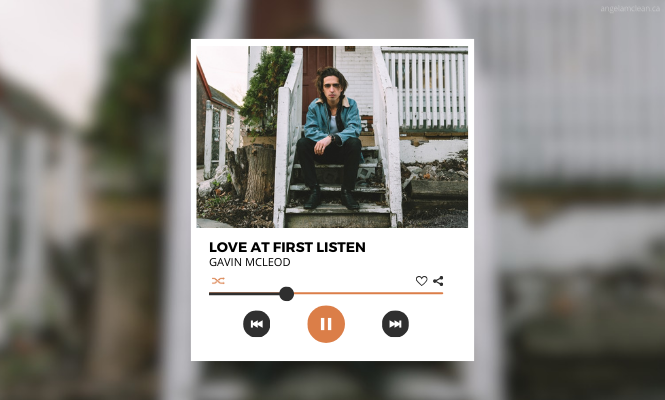
Love at First Listen with Gavin McLeod

Gavin McLeod Interview Love at First Listen 2025

We all have those artists and songs we hear that strike the right chord and make us fall in love at first listen. They’re the reason we refresh social media pages, tour schedules, and Spotify profiles — because we can’t miss a single release. This is Love at First Listen — a series introducing you to the emerging, and established, artists with new music guaranteed to upgrade your playlist.

Blending classic and modern rock à la The Strokes, Inhaler, and Sam Fender with the blues music he grew up playing, emerging Canadian artist Gavin McLeod is one to watch. With an EP and several infectious live performances under his belt, Gavin has found his musical footing with ‘The Constant Astonishment,’ his debut album released last month and written over four years, including several pandemic-era writing stints with his bandmates. Songs like “Marigold” (which almost didn’t make the final tracklist!) and lead single “Things We Used To Do” shine with their folk-leaning, intimate-sounding production, but are perhaps most memorable for being pure, timeless head bobbers that will find a home on any playlist.

In this edition of Love at First Listen, scroll through Gavin’s thoughts on maintaining a healthy balance with social media, finding support in the music industry, and the behind-the-scenes scoop on auditioning for America’s Got Talent.

You released your debut album, ‘The Constant Astonishment,’ on Valentine’s Day. Let’s start there: when and how did you come to fall in love with music and songwriting? Who were some of the first artists that you loved at first listen?

I was around seven or eight when my dad put me on a drum kit. He always played drums growing up, so it was a natural thing. There was also just a lot of music in the house. My grandfather introduced me to Neil Young, Fleetwood Mac, and all that early ‘70s stuff on vinyl and then some ‘90s alternative grunge, and that is still the basis of what I listen to. I started playing guitar, singing, and met my guitar player when we were 11. We loved playing blues music early on, and then shifted to playing at bars covering Jimmy Hendrix and Led Zeppelin. We’ve had some lineup changes throughout the years but the two of us have been playing in a band since then, so it’s just been non-stop.

What inspired the album name, aside from your career being a fast-growing success and probably a constant astonishment in and of itself?

The title track came from looking outward and seeing how people are so addicted to their phones nowadays and constantly needing stimulation or anything to keep them occupied and me kind of feeling disenfranchised with all that stuff. I liked the name; it fit in with a bunch of themes that I was writing about at the time, and it rolled off the tongue, so it just became the record name.

As an artist today, that’s an interesting position to find yourself in with so much growth happening on TikTok and YouTube, and then having this feeling of it all being a little too much.

Yeah, it’s scary. I feel like most artists go through this, but you could be really hot on it one day and be like, this is great. The next day, you might feel real down on it. You have to find a way to work with it and be creative. It’s not easy, but back in the day there was nothing like this to be able to self-publish or do anything yourself. So, there’s probably more positives than negatives, but it can be a lot when most of your day is working off of screens. It becomes much less about the music.

Your album release was supported by FACTOR Canada. As an emerging Canadian artist, what does it mean to you to have their financial backing, and what advice would you give to future cohorts of breakthrough Canadian talent?

For people doing this moving forward, there’s a lot of support out there, but it doesn’t mean much unless you’ve got your foundation and your plan and you know what you want to do. That said, the support being there really does help. The fact that you can get this kind of support from FACTOR, and that the government supports that, is crucial because it’s obviously a very hard industry to breakthrough in. I don’t think there would have been a chance that we would have been able to record the way that we did if we didn’t have them. We were able to go in and do a live off the floor thing at this beautiful studio for a couple weeks, and it was all because of FACTOR. So, definitely a lot of love there.

Although your America’s Got Talent audition didn’t air, what experience and exposure did that time bring you?

It was a couple years in the making where they had reached out on Instagram and asked if I wanted to do the show. What you see on TV — the audition in front of 2,000 people — they’ve curated those people to get to that point, even though they make it seem like that’s the first audition. I was able to go and perform in front of the judges and a big audience down in Pasadena, and I met some cool people from Brazil, Poland, and all over the world. The scale of the show is crazy, so I’m glad I got the experience and the opportunity. I’ve never felt that weird and nervous for anything I’ve done.

You’ve played some of Toronto’s favourite venues, including Horseshoe Tavern, Rivoli, Drake Underground, and Velvet Underground. Do you have any other venues on your wish list?

I’ve always [said] if there’s any way we could play at Massey Hall, that would be insane. That would be number one bucket list. But I don’t know if that’s going to happen.

We need to have positive energy here. You’ve played TD Music Hall, which is in the building.

Yeah, that’s in the building. We’re almost there. [We] got to go in the elevators and stuff. I was like, this is close enough. (Editor’s note: For now!)

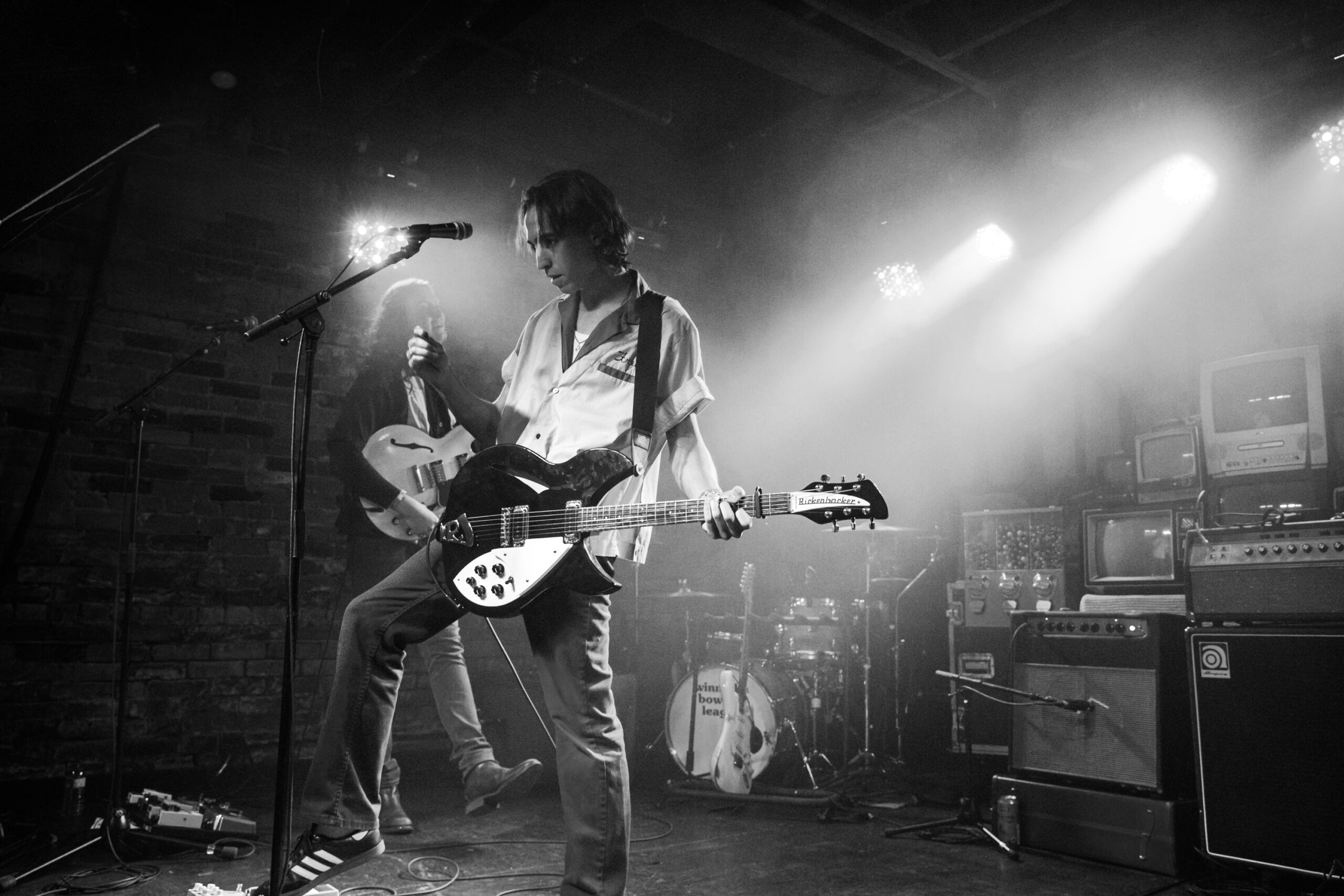
Singer Gavin McLeod photographed performing live on stage in Toronto. (Photo courtesy of Gavin McLeod)
Singer Gavin McLeod photographed on stage in Toronto. (Photo courtesy of Gavin McLeod)

Spill the tea: which of these venues has the best green room?

The El Mocambo green room is amazing since the renovation. They’ve done some something really nice there, although I also like a crusty, sh!tty looking green room as well. But yeah, it feels like a five-star hotel. It’s very nice.

Speaking of Velvet Underground, that’s where we were introduced — when you opened for Winnetka Bowling League earlier this month. For those who aren’t familiar with the behind-the-scenes intricacies, where are you and what are you doing when you get that invite?

We were meeting with one of our guys from Dine Alone [Records] and he had an email come through. He was like, “Do you guys want this gig?” There’s a song that they came out with a couple months ago called “This Is Life,” and my guitar player Patrick and I [have] played that song a million times. It’s with Medium Build and Dawes, and we love those guys. Sometimes you open for someone, you don’t really know their music, and you get to know it. But we were big fans of their stuff beforehand, so it was quite cool.

Now that ‘The Constant Astonishment’ is out, I’m sure you’re still riding that high and living in the moment, but can you tease where you’re hoping to take this music next?

Everything we’re writing and recording right now is very UK indie rock inspired. We’re hoping to start putting new stuff out in the next couple months — some singles, maybe leading up to an EP. We don’t really have a concrete plan yet, but there’s a lot of new stuff in the tank, and we want to get it out there. We’ve got some festivals and shows in the summer and a couple other slots coming up. Everything will be shared on Instagram.

Continue Reading

Love at First Listen with Delta Sweet

Delta Sweet Interview Love at First Listen 2024

We all have those artists and songs we hear that strike the right chord and make us fall in love at first listen. They’re the reason we refresh social media pages, tour schedules, and Spotify profiles — because we can’t miss a single release. This is Love at First Listen — a series introducing you to the emerging, and established, artists with new music guaranteed to upgrade your playlist.

Life has been extra sweet to Patrick Kordyback this year—make that Delta Sweet. Known and loved by fans as the frontman of Canadian pop-punk group Stereos, Pat recently celebrated the 15th anniversary of the release of his band’s debut record while reintroducing himself to the music world as a sharply defined, solo country act. His official debut single “Outta Money, Outta Mind” is a fun, catchy record celebrating the underdog and gives fans old and new more to look forward to in 2025.

Speaking of what’s ahead… Love at First Listen caught up with Pat to talk about the power of timing, which Stereos songs belong on your country playlist, and why he doesn’t care if you call him “the nostalgia act.”

For fans who are just getting into “Outta Money, Outta Mind,” when did your love for country music start, and how did Delta Sweet come about?

I grew up around country music like a lot of Albertans, and it’s been the anthem of every summer since I was a kid. I’ve been trying to do this as a separate project since 2011 with two of the guys from Stereos. We recorded songs, had them produced, and everything, but the timing was never right. I tried it again around 2019 and same thing — recorded songs, had them ready to go, and it just wasn’t the right timing. I think I’m an old man in the music industry in a lot of ways now and one thing I’ve learned is that the timing you [expect] is rarely how it works out, so I’m happy that stuff didn’t come out. I don’t think the songs were necessarily there yet, but now … the third time’s the charm for me.

What does the name Delta Sweet represent to you?

It’s a play on this old album by an artist named Bobbie Gentry. She was one of the first women to write and produce her own music in the ‘60s, and she did this Southern Gothic style, bluegrass, country-influenced album called ‘The Delta Sweete.’ I loved that word combo when I found it, and I think every artist knows this process — you have an idea, then you start Googling [and] start looking on Spotify to see if it’s taken. To record under a moniker as opposed to my own name was a decision I made because this is my first time ever going solo when I wanted to look and feel exactly like I wanted to. And it was something that I felt was a lot cooler than Pat Kordyback, to be honest.

Your girlfriend Hayley, who’s also an artist, is featured in the music video. What was it like working with her and spending the day on set together?

Her character in the video is intentionally not nice to me and very demanding. It was two takes in where Travis, the director, said, “She’s way too good at acting mean to you.” She was character acting, and she was flawless, but there’s some takes where I was like, “You need to relax!” But she killed it and is the star of the video in many ways.

You first introduced Delta Sweet to the world back in April with “Pour A Little My Way,” a collaboration with your friend Ashton Adams. How long have you been working behind the scenes to bring Delta Sweet to life, and what did the reception to that song mean to you?

That song was in the top 40 on the Spotify Canadian country charts very quickly after release, and it blew me away seeing my name on there. We were very lucky to get some really good playlisting support on straightforward country U.S. playlists, which was sort of unexpected because it is an EDM country song, and so I was not expecting it to get buy in necessarily from those top-tier editorials that focus strictly on country. But it spent months on some of them, and it was really helpful, especially out of the gate as a new artist.

As people start adding your new music to their playlists alongside some of their nostalgic Stereos favourites, what would you consider your most country-inspired throwbacks?

If you go back to our album ‘Cheap Thrills’ in 2022, one of my favourites is “Glory Days,” and I wrote that with Aaron [Verdonk], our drummer, and Dan Davidson, who’s a great songwriter that I look up to in Canadian country music. For our first ever album ‘Stereos,’ we did a deluxe version where, if you bought it, you would get a song a month, and one of the songs we did there called “Back Home” was definitely country-influenced. So, it’s definitely been something that I’ve been honing for a long time. With Stereos, if we were to do more new music, my eyes have been opened to a completely new world of the session players that you can get to play on your stuff. They’re so good.

More recent Stereos music really focused on capturing the vibes of your live shows. Thinking about country music, which is also big on how songs translate to the stage, are you approaching Delta Sweet performances in a different way?

I would love to hear from fans on this because some industry people are like, “Listen, man, no one’s going to take you seriously in country if you’re still doing the Stereos thing.” Fair enough. But I just went to the CCMAs here in Edmonton, and for so many people, once they found out about the Stereos thing, they were immediately interested in what I was doing. Then, it was suggested when I’m doing Delta Sweet, I should play “Summer Girl,” or a country version of that, live. I think it would be a lot of fun to do some of the old songs. I’m definitely not someone who’s like, “Don’t talk about Stereos! This is Delta Sweet only.” Stereos is something I’m proud of. It’s part of my story, so I’m down to incorporate it.

Speaking of Stereos, you and the guys reunited to perform at All Your Friends Fest this year alongside Fall Out Boy and Plain White T’s. What was it like getting back on a festival stage and seeing people still singing every word 15 years later?

It’s one of the most special things you can ask for as a musician. You hear the term one hit wonder, or like, “What happened to these guys? I forgot about them.” You know, there’s people who will make those comments, but if you think about what the term one hit wonder means, it means that you got a song so big that anything else subsequent didn’t quite live up to the same hype. That’s objectively true. But then you work backwards to how that band started, and who those kids were that started that band. When I wrote that one hit wonder, [I was] working terrible retail jobs, quitting each of them so I could go play one show in Winnipeg, then one day coming back and getting another terrible retail job so I could play another show in Vancouver. We were such massive dreamers, and we saw our dream get so big to a point that we never even imagined.

[All of this] has had that long lasting ability where I’m meeting fans who, like you, are showing me photos from years ago, [or] who I remember coming out to shows as super fans in junior high and now they come and have kids. So, one of the most amazing things for me to have learned is that being a throwback and being the nostalgia act is not in any way a bad thing. It is one of the most beautiful things we’ve been able to experience. I made the joke on stage that I’m getting gray hair, and I’m playing with Fall Out Boy, which is one of the bands that inspired me to even start playing music. Like, I’m one of the lucky ones.

As you embark on this new chapter and reflect on everything you’ve achieved so far—from making music in Alberta when you were 13 to going multi-platinum, winning a JUNO, and so much more—what’s the biggest lesson you’ve learned along the way about making music or managing stardom that you could pass along to up-and-coming artists?

I always give the “it’s like trying to win the lottery” analogy to people. The best way to win, or the best chance you have at winning the lottery, is to have as many tickets as possible. With music, a ticket can be being nice to everyone you meet. It can be taking care of yourself. It can be writing the best songs possible, making connections, know[ing] the right people. Everything you do [helps give] you the best chance. Now, you’re still probably going to lose. Do you want to do it? If [you] answer yes to that, then this is meant for you. But if you’re like, I have to try and do all that, and the chances are [I’m] still going to lose? It feels like that many days for many of us. It’s 30 rough, tough days wondering if anything’s going to happen for every one day where it’s like, oh, I got a break today. But those breaks are what keep you going.

To sum it all up, I also say no one knows what they’re talking about. The most intelligent people you’ll meet in music will say, “Here’s what’s worked for me,” but also this industry changes one day to the next. If anyone approaches you being like, “I know everything,” the best, most talented A&Rs [and] managers miss on things, and so at the end of the day, you have to make your own gut decision. Talk to as many people as you can but listen to your gut because there’s just way too much that is up in the air for you to fail — and fail just listening to everyone else the whole time, because that’s tough to swallow. But if you, for lack of better term, fail but it was your call, you can live with that. You can learn from it, adjust, and keep going. It’s very hard, but it’s amazing too.

What can you tease for fans to look forward to in 2025?

It’s going to be a lot of me starting to be consistent with my release schedule. So, a lot of singles, and then I’m going to be working towards an EP in the fall or early 2026. But I am sitting on music now that I can’t wait to release already. It’s some of my favourite stuff I’ve ever done, for sure. I would say in the early New Year, expect new music.

Continue Reading
1 2 3 10